One of my favourite roles at Microsoft was the UK Technical Director for Global Partner Solutions. I describe this role on my LinkedIn profile as “Delivering Customer success through our Partners by focusing on business outcomes, innovation and sustainable business models.“. I held this position for five years, during which I dedicated my efforts to comprehensively understanding customer expectations from partners and supporting the UK partner ecosystem in meeting these needs while standing out in a competitive market.
I saw three things as fundamental to what we needed to do:
- Business Outcomes – We would prioritise our efforts on partners that focussed on driving business outcomes for their customers
- Innovation – We would prioritise our efforts on key innovations (such as AI) where partners could offer something unique to help customers scale their own technology ambitions
- Sustainable business models – We would prioritise our efforts on engagements that focussed on repeatability, differentiation and founded on sound business plans
Over many years I was curious as to why a customer would select one partner over another. I would take every opportunity to ask customers “Why” and “What would you do differently” when it came to partner selection. I’ve categorised this feedback into seven areas:
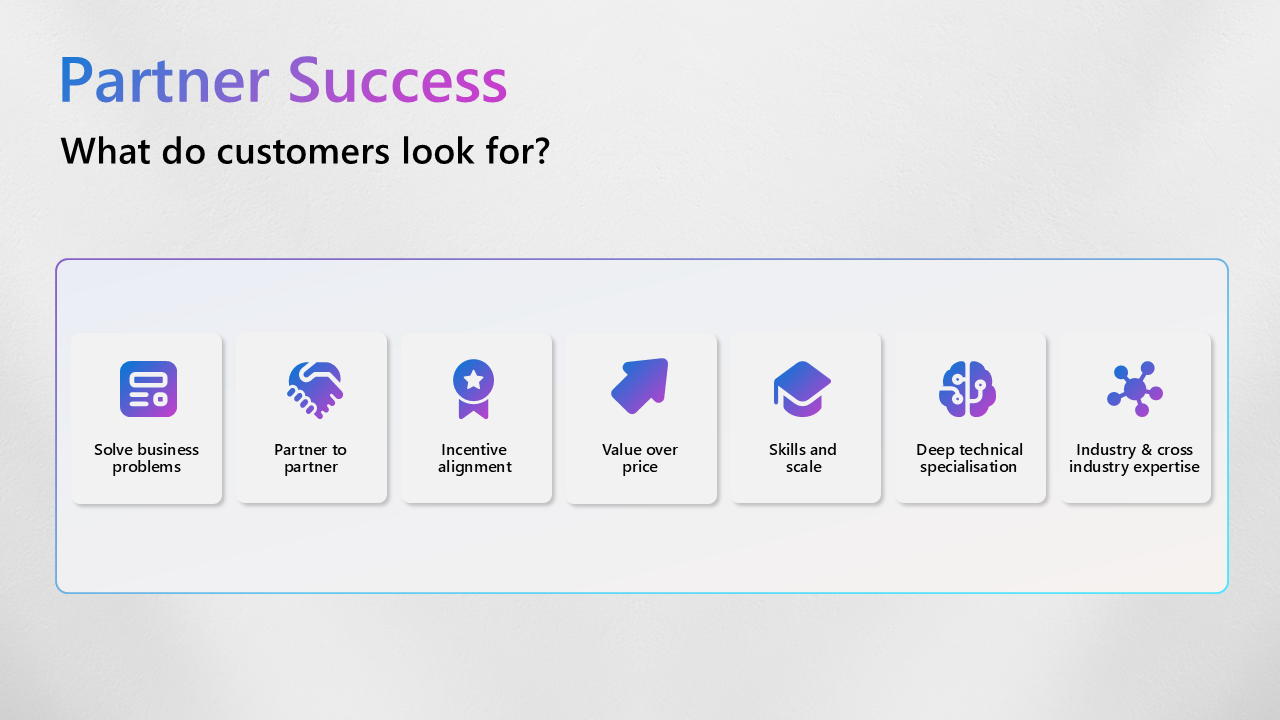
- Solve business problems – Business outcomes are more important than how we typically measure project project success (e.g. Time, Budget, Scope). A project should only been seen as a success if it meets the objectives of the business and the needs of the users. My article implementation best practises covers this in more detail: https://markmargolis.me/2014/02/10/crm-implementation-best-practice-with-microsoft-dynamics-crm/
- Partner to Partner – It is unlikely that a single partner is going to be able to meet the entire objectives of any business. Successful partners have a large network, they have a good understanding of the ISV ecosystem and are they willing to work together.
- Incentive Alignment – Price is always important, but long-term economies of scale are more important. As a partner becomes increasingly integrated into the business, successful partners ensure that the customer is always getting value for money. Partners help the customer upskill even if this means lower revenue in the short term. It is about long term value creation.
- Value over price – Price is important but organisations are willing to pay more if they can see the value. Customers want strategic alignment with an organisations business plan. They want to avoid managing a fragmented partner ecosystem. Successful partners and strong relationships are based on strong culture alignment and are comfortable challenging the customer and having honest conversations about what is and is not working well. Successful partners provide the right team with the right capability.
- Skills & Scale – Customers are becoming more technical (“every business is a software business“). How will the partner amplify the customers technology capability and enable it to scale. Successful partners move quickly. Customers already have commoditised technology capability, they need to “burst” and great partners act quickly.
- Deep technical specialisation – If “every business is a software business” then successful partners not only provide scale but they also provide deep technical specialisations in areas of high demand and innovation (AI, Agents, Automation etc).
- Industry & Cross industry expertise – Customers don’t want to train partners on their industry, they expect partner to have it. Successful partners are steeped in industry know how. Furthermore great partners bring cross industry expertise and best practise from adjacent industries.
To give you a sense of the difficulty for customers when choosing a supplier, consider this picture that represents the vast ecosystem (and therefore choice) a customer faces. In this case just for a marketing solution.

As I was developing a strategy for how I would:
- A) create a differentiated UK partner ecosystem
- B) Assess the capability of the ecosystem and
- C) build a plan to transform the ecosystem
I was fortunate that a great colleague of mine at Microsoft Melissa Mulholland (now CEO of Crayon) had commissioned a series of “Modern Partner” ebooks with IDC and this provided a foundation by which we where able to create a “Partner Transformation Index”.
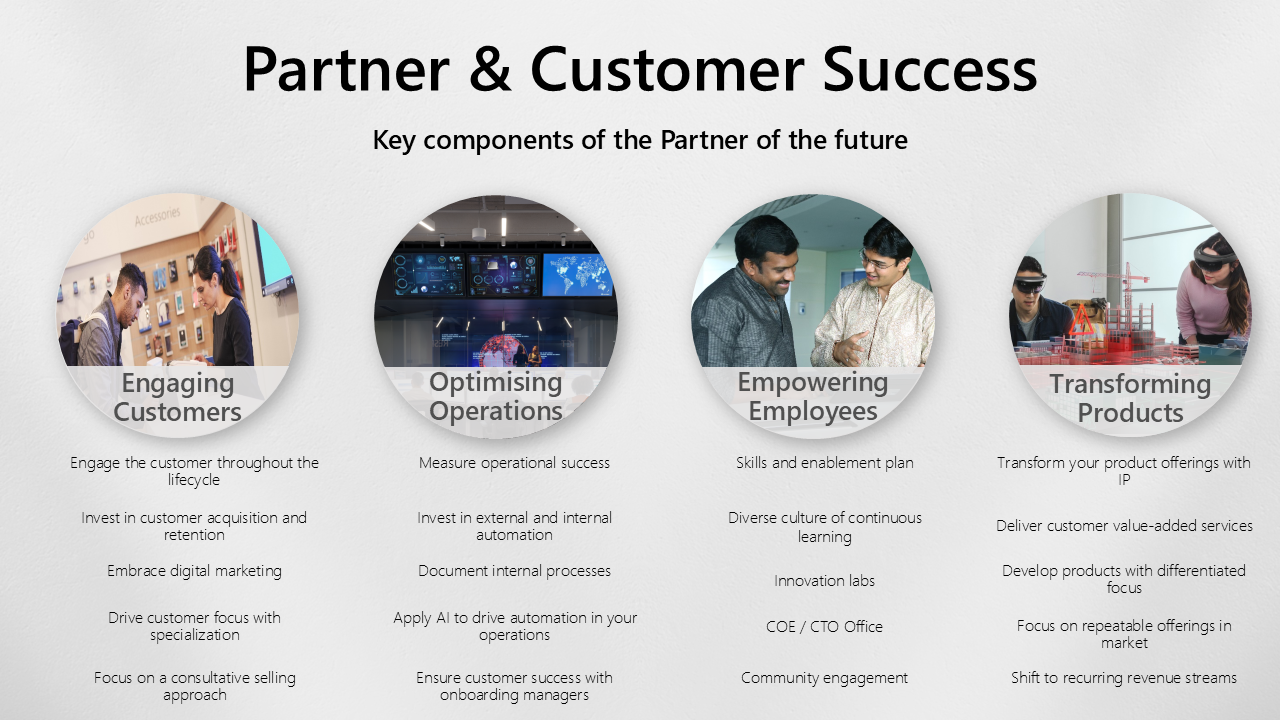
We scored each of our partners according to 4 categories:
- Engaging Customers
- Optimising Operations
- Empowering Employees
- Transforming Products
Each category contained detail that enabled us to build a comprehensive plan with partners. You can read the full details of each category in the following ebooks:
- DX1. Digital Transformation Opportunity
- DX2. Engaging Customers
- DX3. Empowering Employees
- DX4. Optimizing Operations
- DX5. Transforming Products
You can download the above images in PPT format here.
I hope this article is useful, please do share your thoughts. Thank you for reading!


 Mark Margolis