An illustrative guide: How conversational UIs and agents simplify complex tasks, demonstrating the transformative impact of AI on user experience, efficiency and application design.
There are many developments in the industry regarding agents, which are expected to positively affect end-user experiences, organizational capability, and drive exponential business outcomes.
I’ve created a story to illustrate how agents can enhance apps, systems, and processes. Agents will operate autonomously, independently and cooperatively across boundaries to handle complex or mundane tasks, transforming application development, system integration, and user experiences. This shift will require a new approach to software development.
How might the experience look?
We’ll lets imagine the future for a moment: Lets say we’ve been tasked with creating an event for our top 100 customers in London. Event management is complicated, even for small events. What if we could just ask our conversational UI, “I want to run an in-person event in London for my top 100 customers, can you help me?“
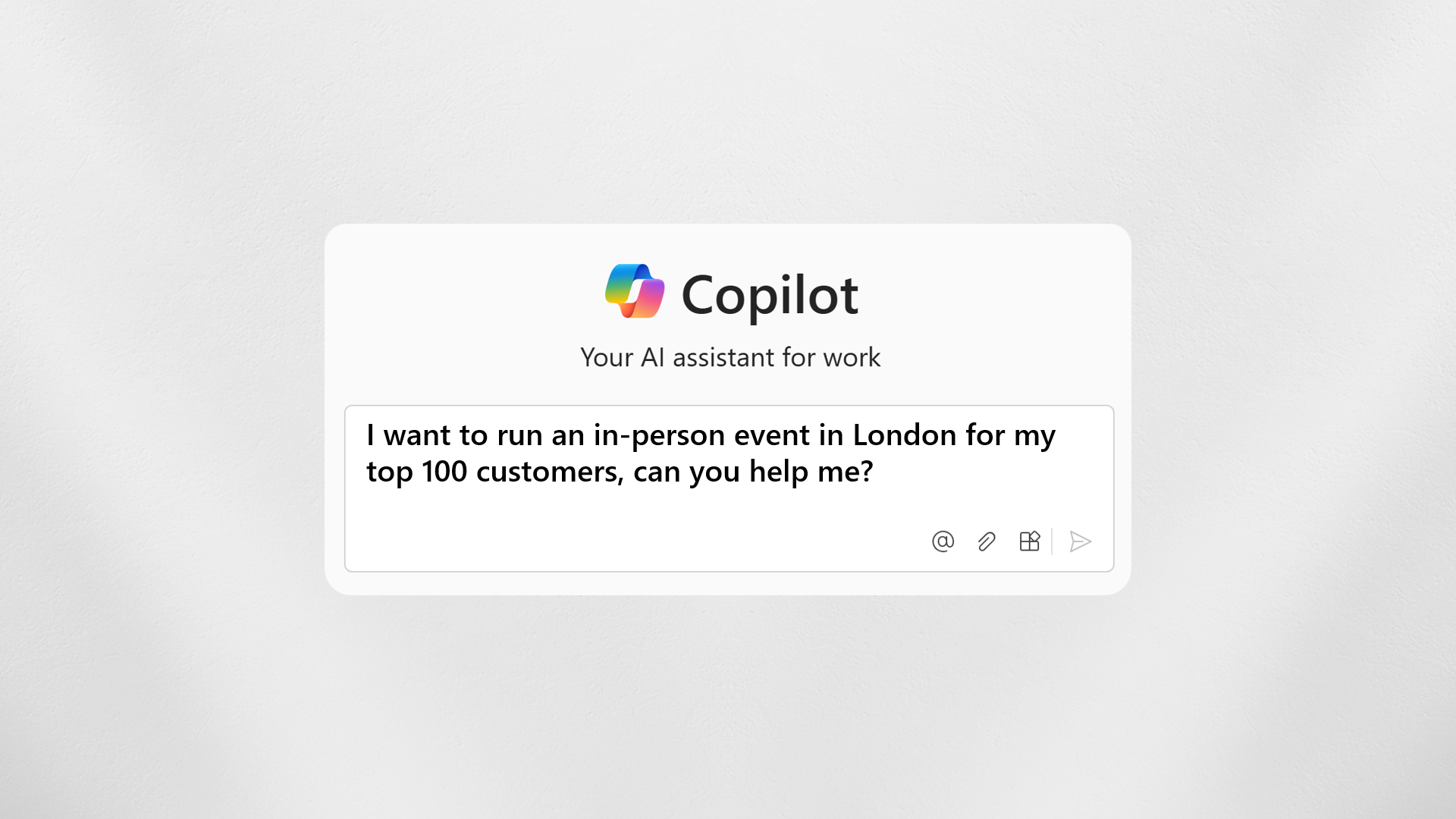
Lets imagine that scenario and how it would play out today. It would probably fall to someone in marketing and this individual (or team) would plan an execute everything they need in their marketing application. Except it is not quite that simple is it……
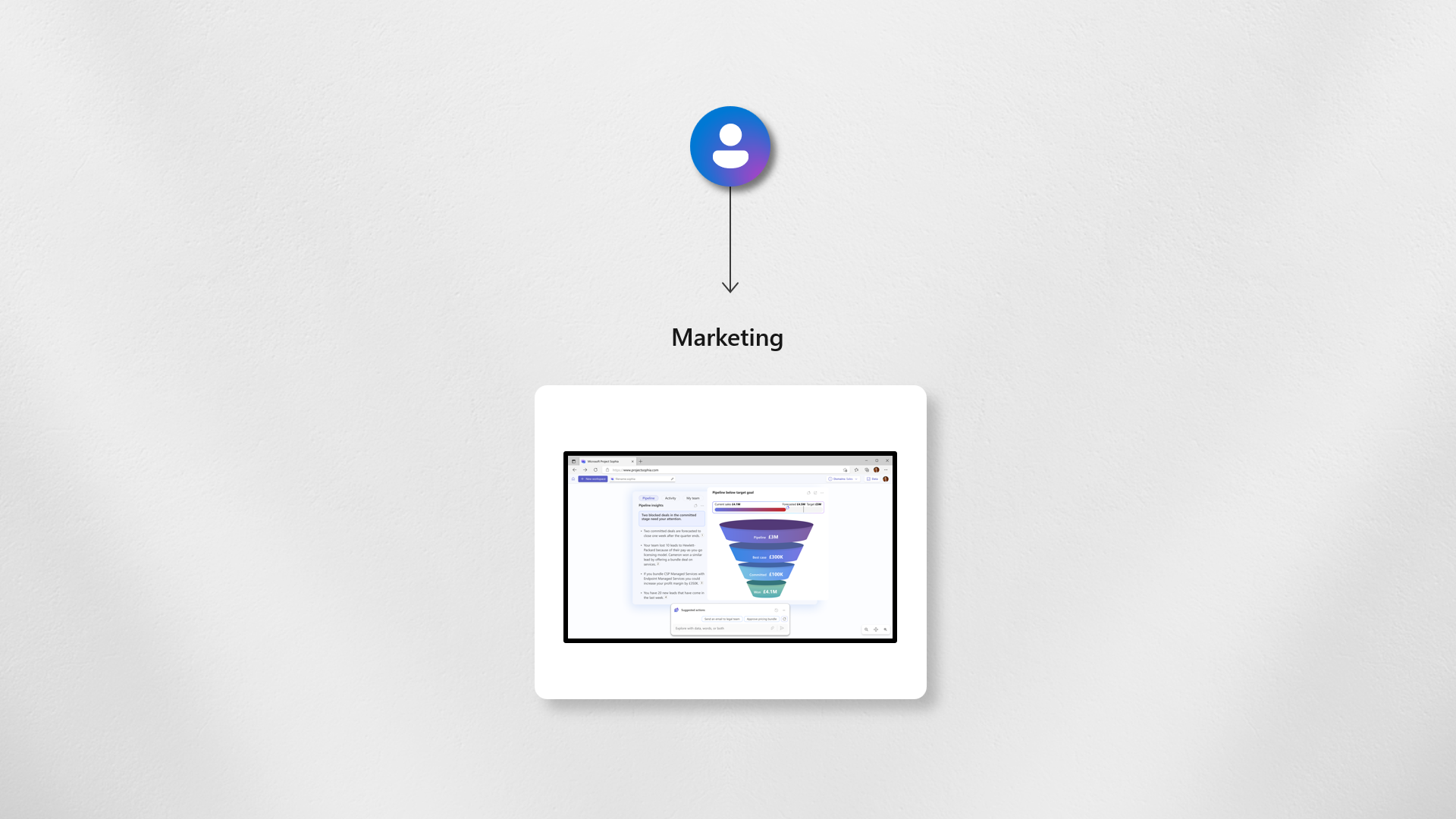
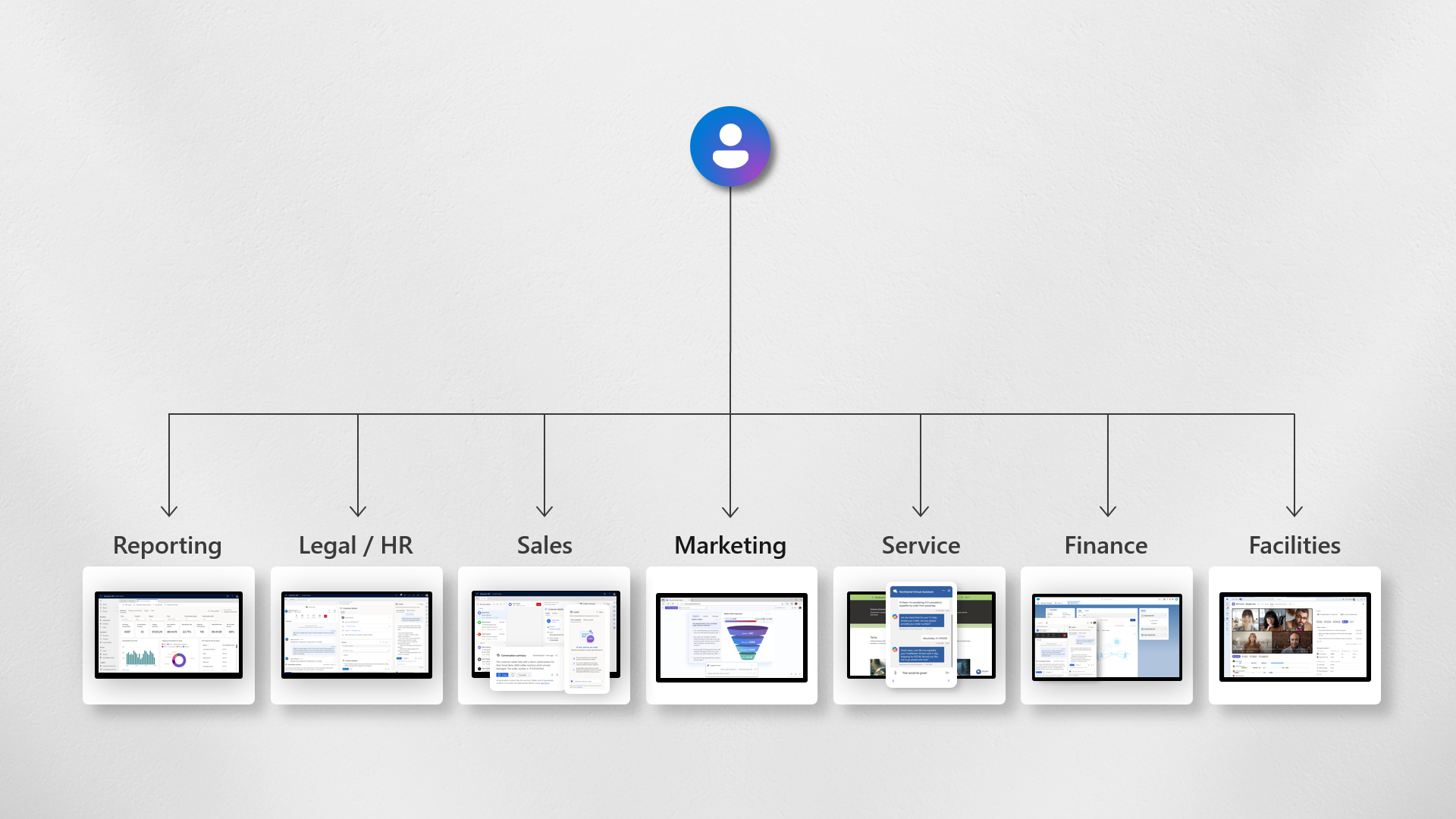
The reality is that we cant think about one application per user. Just as a sales person doesn’t just use CRM a Marketeer requires access and knowledge of a whole suite of applications. For example in this case as a markeer we would need to:
- Create the campaign event and code in marketing to track ROI.
- Generate a PO code in the finance application.
- Book rooms or spaces via facilities.
- Involve legal and HR to comply with event policies and PR requirements.
- Use the sales tool for top customer details.
- Ensure a service support contact is available for registration and event issues.
- Access reporting to track registrations, attendance, and ROI opportunities.
When you consider it, there are numerous systems that an individual must a) be aware of, b) have access to, and c) receive training on. For a new employee, how long would it take to become proficient with all these tools?
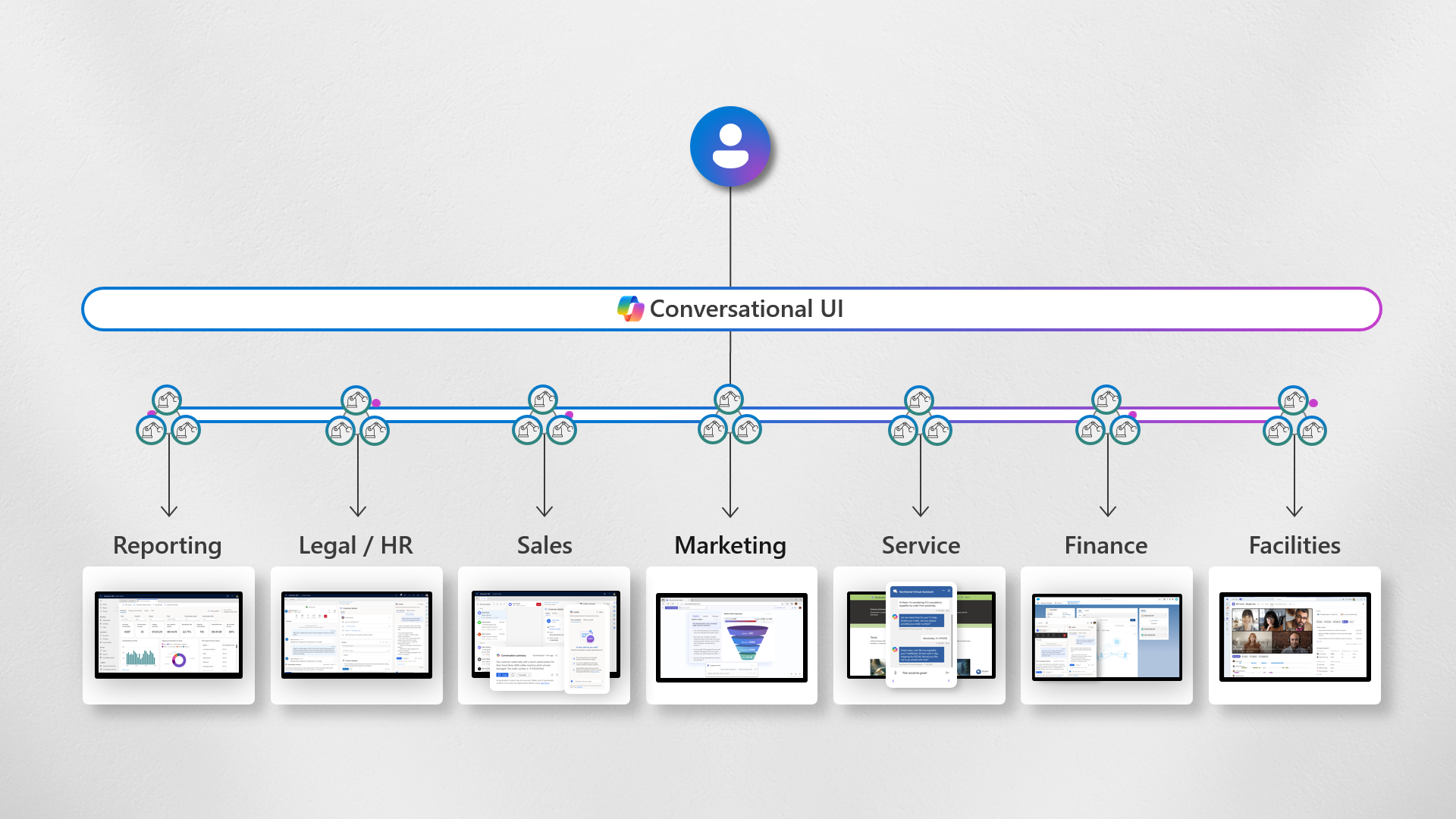
Today, we’re seeing ways to simplify things for end users. Conversational UIs are being placed in front of applications to make complex systems easier to use. Until recently, these UIs have operated independently.

Agents are increasingly enhancing this experience. They perform specific tasks related to the required process and can operate autonomously to significantly simplify the experience.
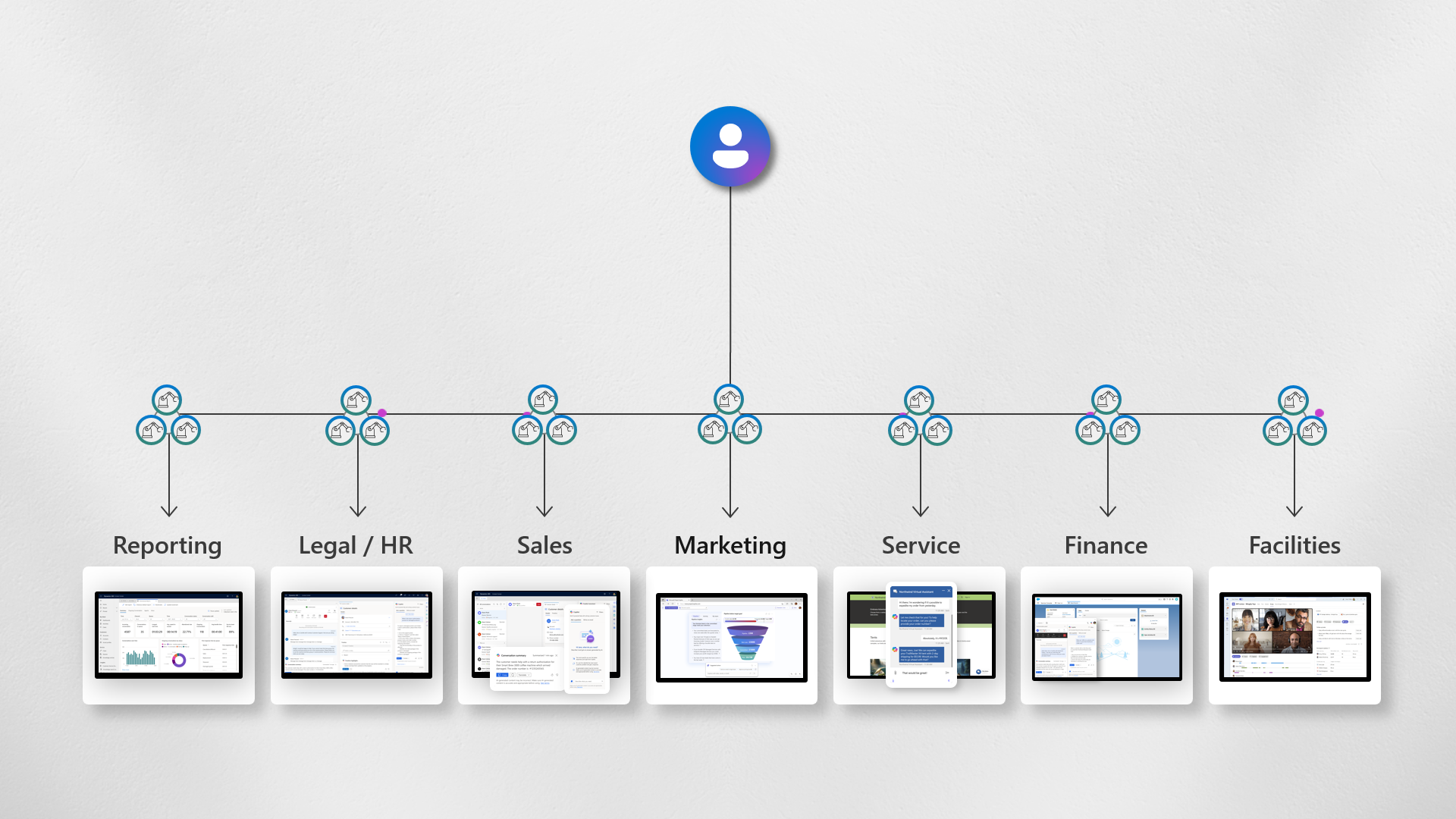
More importantly, these agents can communicate to complete tasks across systems, enabling end-to-end experiences. For instance, creating a campaign in Marketing automatically triggers a PO request in Finance. Upon approval, this books the event space automatically, and so on.
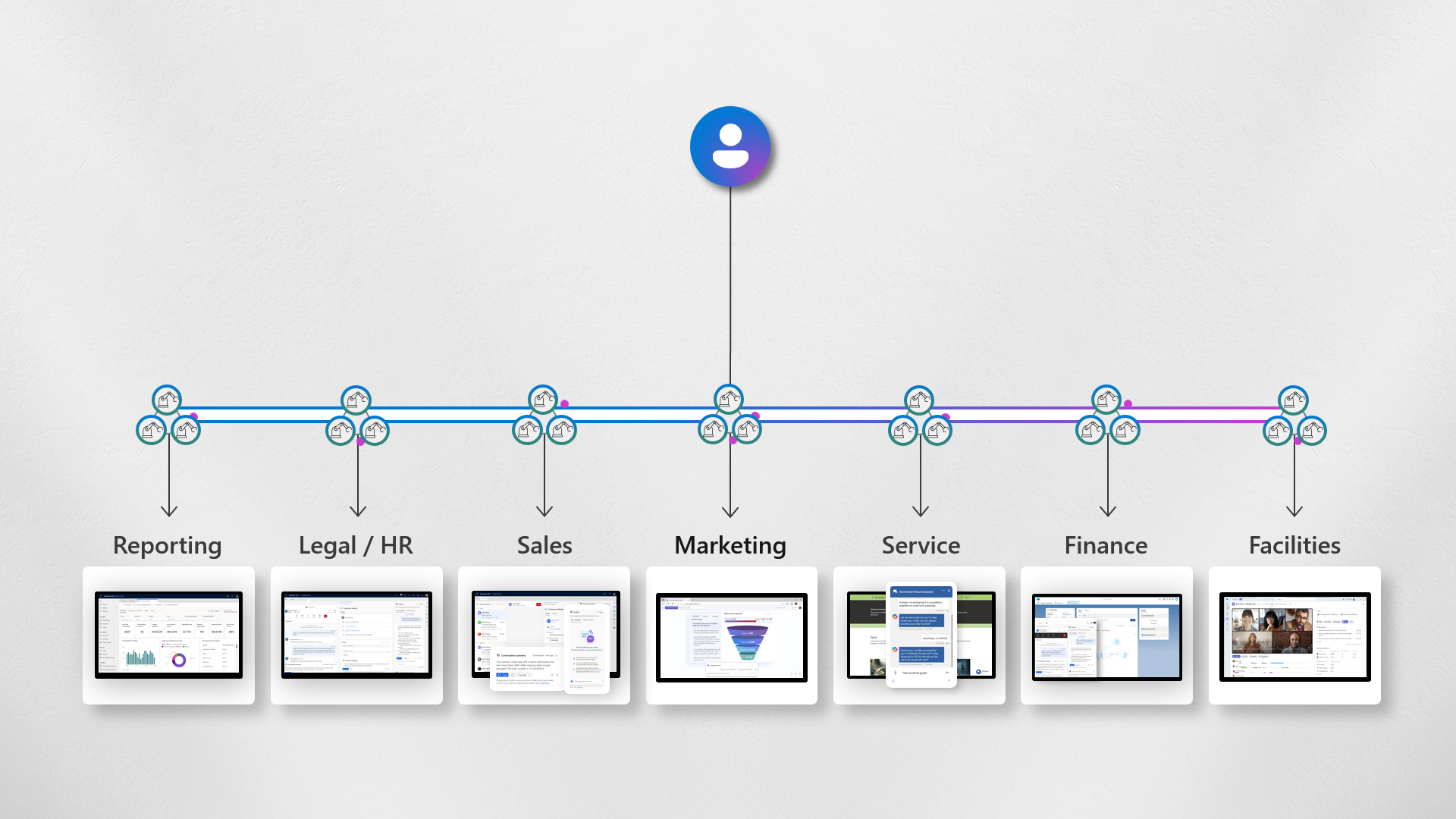
Back to where we started, on top of these agents is the conversational UI. The application experience layer that the user can ask a simple question “I want to run an in-person event in London for my top 100 customers, can you help me?” The agents then autonomously manage the cumbersome tasks asynchronously, allowing end users to concentrate on content, customer experience, and maximizing ROI, rather than struggling with systems
As we move forward, the end user experience will evolve with more dynamic UIs tailored and delivered in real-time by AI. For instance, if a finance professional needs to approve a PO for an event, they will see only relevant information, like ROI, without additional marketing details. This personalized UI approach eliminates the need for custom rules, custom built interfaces, reduces complexity, speeds up employee onboarding, and minimizes errors, thus enhancing drastically efficiency and effectiveness.
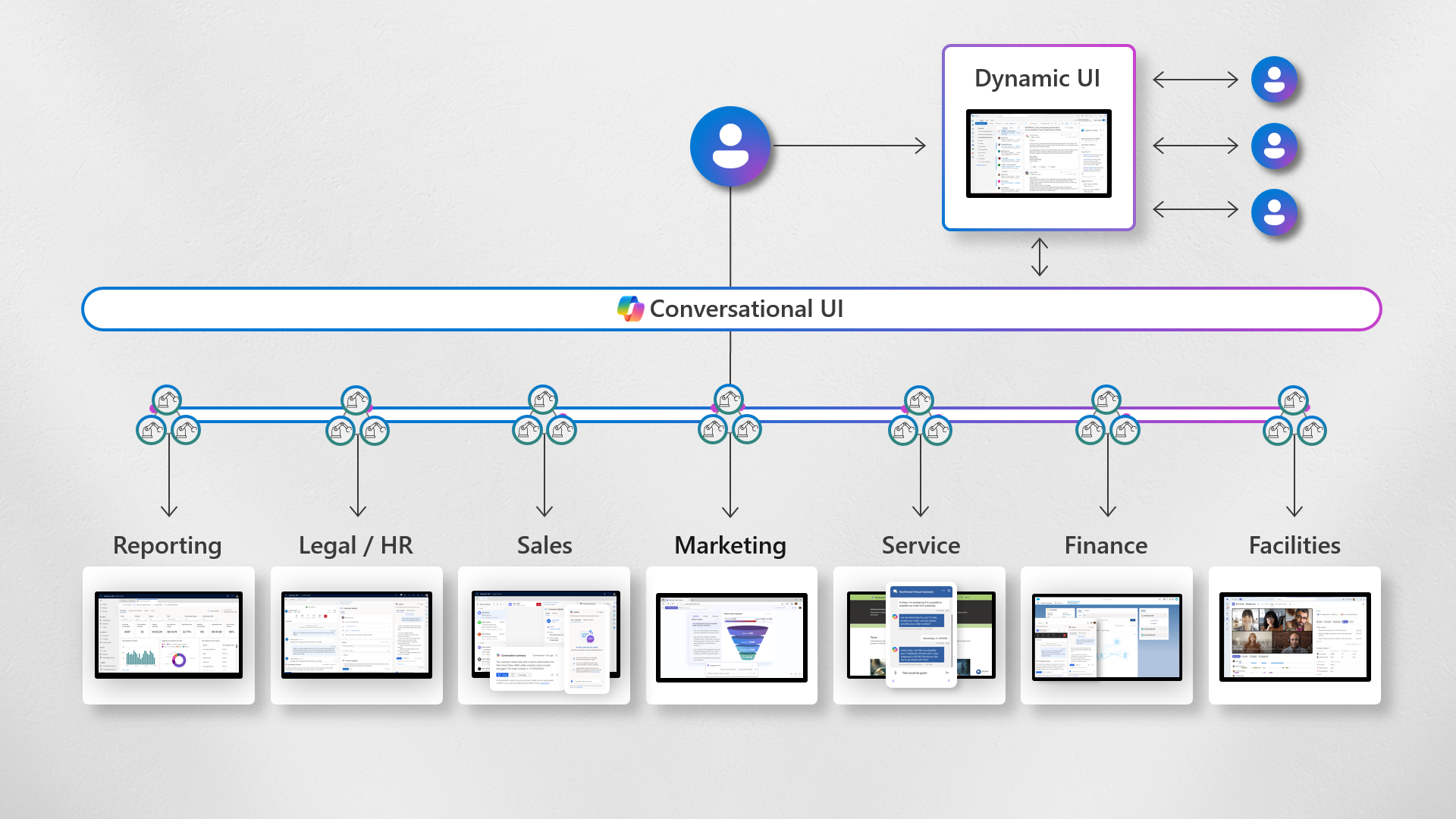
I hope this demonstrates how agents will greatly improve user experience, enhance efficiency, and transform application design.
Here is the animation as a gif:

You can download the PowerPoint deck here:
I’d love to hear your stories in the comments.
BTW, If you are interested in the concept of dynamics UIs, take a look at Project Sophia.
Click the subscribe button at the top of the page if you want to notified on future posts. Thank you.


 Mark Margolis
Love the breakdown of the steps here, Mark. I’m very visual and this sort of content is really useful to engage with complex topics with our shared clients.